


Seymour House Early Reading Programme
Welcome to our early reading programme
Our programme is designed to support your child in taking their first steps in learning to read and to ignite a love for books that lasts a lifetime. Our goal is to nurture a passion for reading, to build healthy reading habits for school and beyond.
Programme overview
To learn to read children need to know which letters (graphemes) correspond to which sounds (phonemes).
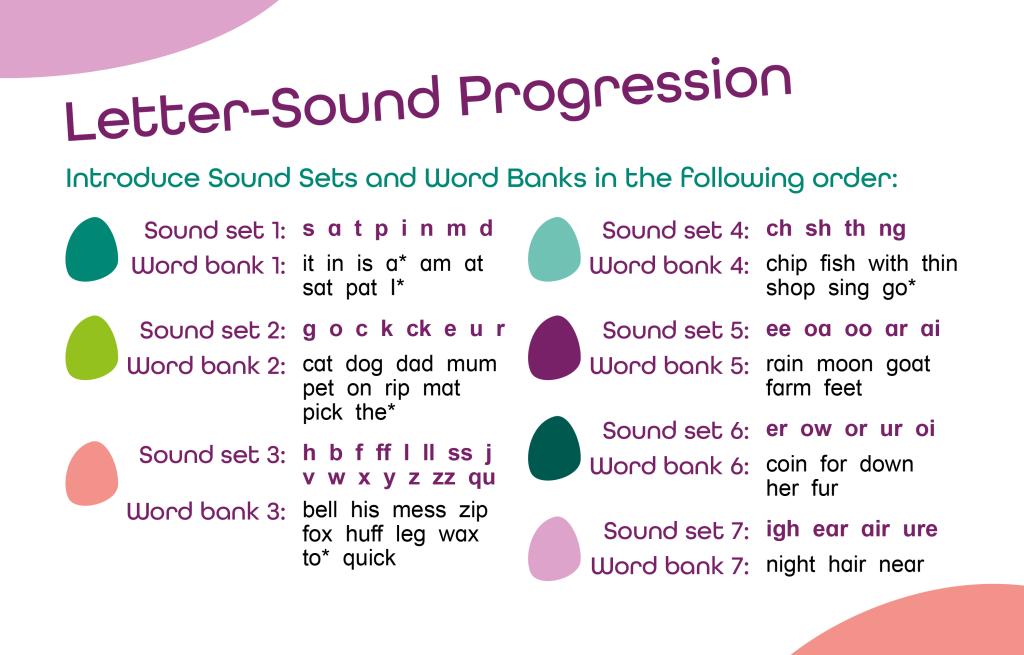
Letter sounds are not introduced in alphabetical order, but in an order that allows children to blend sounds together to start to read first words more easily. For example, once your child is confident with the sounds s, a, t, p, i, n, m and d, they can start to blend these together to read words like it, in, is, am, at, sat and pat.
Some words cannot be decoded using phonic methods, these are known as harder to read and spell words, or tricky words. We teach these words through sight recognition. Keep an eye out for the * symbol in our resources to identify these words.
How to use the sound sets
Show your child each letter sound, modelling its sound, not its name. Encourage your child to repeat the sound back to you. Play games in short, fun sessions as new letter sounds are introduced. For example:
Sound hunt – find objects around the home that start with the new sound.
I spy – play I spy to spot items that begin with that sound.
Hide and seek – hide cards around the home for your child to discover.
Storybook search – look for letter sounds in your favourite storybooks.
Once your child is confident with sound set 1, it’s time to dive into word bank 1. Progress through each sound set and the corresponding word bank, from 1 – 7. You’ll notice we’ve colour coded sets for ease.
How to use the word banks
Show your child each word, modelling how to read by segmenting into individual sounds, then blending sounds together. Encourage your child to do the same, running your finger under each sound in turn as a guide.
As new words are introduced, focus on vocabulary. Don’t forget to keep an eye out for words marked with a * to identify words that are harder to read and spell.
Once your child is confident with word bank 1, jump to sound set 2. Progress through each sound set and the corresponding word bank, from 1 – 7.
For correct pronunciation, checkout the guidance on the back of each card, or listen to the sound buttons below:
Sound Set 1
s
a
t
p
i
n
m
d
Sound Set 2
g
o
c
k
ck
e
u
r
Sound Set 3
h
b
f
ff
l
ll
ss
j
v
w
x
y
z
zz
qu
Sound Set 4
ch
sh
th
ng
Sound Set 5
ee
oa
oo
ar
ai
Sound Set 6
er
ow
or
ur
oi
Sound Set 7
igh
ear
air
ure
Reading journal
Your child’s reading journal captures their early reading progress. This journal will keep you updated on letter sounds your child is practising at nursery, so you can focus on these at home. Your key person will share book titles for home reading and will provide further ideas to enhance your child’s reading experience. We love for parents to participate by adding comments too!
In addition, the journal provides useful information as your child begins the programme, with details on:
- Pre-reading skills
- How to support your child in learning to read at home
- Understanding reading book bandings
Let the reading adventures begin!
For more information, please speak to your key person or Head of Early Years Practice